|
As I have gotten older, I find that I must rest more. A friend commented that St. Paul said, "The spirit is willing, but the flesh is weak." While St. Paul was talking about temptation and I am not, I related immediately. My mind and spirit have boundless energy, but my body needs to rest sometimes. The rest feels like a disruption that I resent, but need to accept. I do so, but not graciously. In order to be my best at doing the things I really want to do, I need to respect self-care, and this takes time. I like to help people and to write, but I acknowledge that self-care is necessary, not just an option.
While allowing time for self-care is not easy, I ask myself, if this self-care is so hard for me, how would a perfectionist feel about perhaps not doing everything on their to-do list to be able to lie down for an hour? For them it would not just be an issue of needing to do it, but of perhaps feeling like a failure for not completing everything on their to-do list, for not incorporating that hour of self-care into the list in the first place, for not being a good person, or worse, calling this laziness. Self-care is hard, but crucial. For a perfectionist, there is a kind of inner judge saying terrible things about the person, making everything more difficult and painful. Like other things, self-care is harder for the perfectionist. If you set a standard that is too high or too ambitious, and you think that to be a responsible person you "should" be able to do everything, you will judge yourself when you cannot. The frustration and acceptance I struggle with are still there, but the pain of those with the self-judging component is much worse. Part of what I do is to help people with perfectionistic personalities remove the self-judging part. I have listened to many clients beat themselves up because there are not enough hours in a day to do self-care and what they wish they could do. The frustration of that we all live with, but the self-critical part is typical of the perfectionist and creates much more emotional pain. This is why I love to work with perfectionists and issues of shame. As I say in my book, Fear of the Abyss, these are good, decent people who suffer so much in so many situations, their inner judge always ready to cause emotional pain. Accepting that self-care must be done can be hard enough, but it is much harder with the element of self-judging. Don't let shame and perfectionism take self-care away from you! You matter!
1 Comment
People are often curious about what goes through their therapist’s mind, how they feel about them, what emotions they have. While I do not work only with PCS (Perfectionism, Control issues, Shame) issues, most of my clients are of this type. First, I have to say that I believe the way I feel toward my clients is a special kind of love. These clients -- and I say this after over thirty years of practice -- are kind, good people, extremely considerate, and very ethical. They wish no harm to anyone, and if they only treated themselves as well as they treat others they would have no problem at all. Interestingly, people in this group tend to be very, very bright.
People often call for an appointment and describe themselves as highly accomplished, which they are; they go on to tell me that they are in a lot of pain, with anxiety and self-depreciation. They almost always sound like they think they are very unusual, excelling in what they do yet feeling this way, but actually it is common. People who drive themselves hard do not just do it for a goal or to do a good job, but to keep overriding feelings of being unworthy. The monster must be fed, and accomplishments follow each other at a rapid rate to keep the real feeling, of being inadequate or bad in some way, out of awareness. People call to get help, because they are exhausted and do not want to suffer anymore. They don’t realize that with insight-oriented therapy, such as a psychoanalytically or psychodynamically-oriented therapy, bringing the real, underlying feelings into awareness is what they need to do. They know they have very sad feelings; that’s why they keep pushing them back with all their achievements. One thing that has been very hard for me is to see such talented people -- intellectually, artistically, businesswise, etc. -- think so little of themselves. After thirty years I do not feel so enraged for what happened to them, but I still feel anger. I often think of people who raise, with caring and love, children with cognitive limitations, and when they grow up, they are confident in themselves and kind to others. That’s an amazing achievement and certainly not an easy one in our competitive society. Then I think, “But it takes a real talent to have a gifted child, and to convince that child that he or she is totally inadequate and just not good enough.” To make someone believe what flies in the face of reality is quite an achievement, a terrible one. While some parents are quite disturbed and just out-and-out mean, others are well intentioned, and because of how they themselves were raised, impart the message that, if something is not perfect, it is nothing. We have all heard the saying, “Better to not do it at all if it is not done right.” That may be true if we are talking about something important and work-related, but in everyday life, is it not how we learn? And is it then surprising how many adults are terrified to try anything new, because they might not excel at it? The degree to which people are stifled at times seems to me a kind of soul death, and it is truly heartbreaking. Today I went to the dentist to have my teeth cleaned. My dental hygienist is a very nice young and insightful woman. She was telling me how she worked in my dentist’s office and previously in another, and a coworker at the other clinic was a troublemaker. She tried to diffuse the situation with the coworker, but to no avail. She told me that she finally left that job, that she told the dentist the truth about what had been going on, and that she left on very good terms, even though he hated to lose her. She went on to tell me that she started thinking about her life, how she loved coming to work and helping people, and wanted to keep that, and that if she needed to, she could get more hours with another dentist. She said that the quality of her life and her feelings about her job mattered more to her than staying in a place she had come to hate. She said that the troublemaker was young and healthy, and asked why, if she didn’t like her job, she didn’t do something about it. She added, “But people don’t know what they want. We learn to want what we are told to want.”
This was a very sad statement, especially from someone so young, but it is unfortunately true. We are taught what to want and keep trying to get at it whether we like it or not. We are told that the school, the job, the money, the prestige--all meaningless without some satisfaction or contentment--are what matter. Having more than others, being the best--the list of what we are told to want goes on and on. People go broke getting the car they are told to want, or will perhaps attend a school they feel is really not training them well. I can’t begin to count the number of people I have worked with who felt stuck in a job they were miserable in because it was a “good” job that paid well, and a lot of people would love to have it. This has been a theme I have seen over and over for thirty years, and it is very sad every time. We are told to want to chase after certain things and, if it is soul-numbing, too bad; we are supposed to keep on. A lot of people have asked me what a PCS person is. It is an acronym I use in my book, Fear of the Abyss: Healing the Wounds of Shame and Perfectionism, and it stands for Perfectionism, Control issues, and Shame. It represents a type of personality, not an illness, and many people with PCS traits are very high-functioning. However, the PCS person does not have just one trait but many, including the PCS traits, that form constellations, and a PCS person bears a heavy load, one that can lead to anxiety, panic, depression, eating disorders, and other problems.
People with this kind of personality have difficulty making decisions and feel that they are never adequate. If other people stay until eight at work, they will stay until ten. If they have to give a presentation, they will go over and over it, too many times, to try to make it perfect, but they never feel it is good enough. They have difficulty making decisions, because every path has pros and cons, and they are afraid of the terrible self-judgment that would result from the cons. Subjectively, they believe they just fear others judging them--and they do--but the real problem is that the criticism of others resonates with them. Those who like themselves more do not feel so hurt by the criticism or disagreement of others. I cannot say this enough. Knowing your underlying dynamics will bring you more happiness, peace, and control over your life. You can't really live in the present when unconscious issues from your past determine your choices. People ask a lot about relationships, and I think we need to distinguish between what is done consciously and cognitively, and what is driven by underlying feelings, in which case we then use our rationale to justify it.
One complaint that I hear often is people choosing the wrong partner, over and over. I have seen many successful women, for example, in relationships with men with severe addictions, and they try time and time again to induce the person to stop using the drug of choice. I have known many men who choose women who are emotionally abusive and unstable, and they complain of the loneliness and anxiety of this choice. I have seen women with abusive men, who erroneously think that if they only think of the “magical” thing to say or do, that man will change, as if they have that control over other people. A person can make a mistake. A person can think someone is nice and then see a whole different side and leave right away. I am not talking about that. I am saying that when there is a pattern of behavior that leads to a bad choice, over and over, there is something else going on. To address it on a conscious level will not help and I believe that doing this also prevents people from getting the kind of help that will enable them to understand why they do this. Labels are very popular now. Some people will say, I’m a rescuer.” Labels do not explain anything and do not help. Having compassion for others is not the same thing as selecting badly over and over. It is well known to therapists that many people leave one relationship only to start a new one with the exact same kind of person. It is very sad, heartbreaking, when people tell you the number of years they have spent learning that there is a pattern and that this has something to do with them. I feel that we owe our clients at least that. I haven’t posted on my page for a long time. I have been very busy discussing my book with followers on the internet, where I’ve met many wonderful people all over the world, especially now that the book is in French. Even so, I want to post more again and will try to be more active here.
Today I am thinking about Dr. Seuss, a man who wrote brilliant poems for children, witty, funny, rhythmic, that also teach life lessons, good for “big kids” as well. One I particularly like is Oh, The Places You’ll Go. Here’s an excerpt I’d like to focus on for now: As a psychologist, I see a lot of people suffer because they keep trying to change a loved one. They try to force an abusive parent to not manipulate and to apologize, or they try to change a partner or a child. There are parents who try to arrange a child’s whole life, and cannot tolerate any mistakes they may make.
Many years ago in Chicago, I saw a Reiki healer, Deanne Lozano. She is a wonderful Reiki practitioner and I took a few of her classes as well. One day we were talking and she said, “People need to be on the level they need to be on.” We might not mean exactly the same thing, but this has been with me, this piece of wisdom, and has become a part of me. Deanne came from the place that people need to love people as they are, regardless of level. As a psychologist, that is not quite my emphasis. Mine is that we need to ACCEPT that people are where they are, whether we love them or not. Granted, this usually comes up with loved ones, but it seems to me acceptance is more the psychological issue. So very many people experience loneliness over the holidays and others struggle with perfectionism and stress, trying to make sure everyone is having a good time and trying to take responsibility for things outside of their control. But, now that the holidays are over, many people struggle with the letdown. It seems funny for people to go through this: We should be glad the stressful part is over, but that is not always how it is.
For people who live with ongoing depressed feelings, stress can be a good distractor. Oftentimes, people create drama, not even being consciously aware of it, in order to avoid being alone with their own thoughts. They describe a feeling of emptiness that they fear, not yet understanding that this quiet is the path to insight and peace. Others live with constant anxiety, and while the holidays can make this worse, they do enable people to externalize the anxiety. Once the excitement is over there is often a feeling of unease, as they then go back to their usual state. This is why the time right after the holidays is often a busy time for therapists. It has been said, and it is true, that a crisis can be an opportunity for growth. While no one would willingly go through a crisis, when one gets help for issues that are usually ignored, those issues often disappear. A similar thing can be said for the holidays. Whether the holidays were generally happy or sad, when the external excitement has died down, going back to the usual level of internal noise or quiet can be disconcerting for many people. Instead of panicking, it is possible to know that this is the normal state of affairs, and that just like with a crisis, seeking help for those issues that speak to us in the quiet, instead of trying to once more drown them out, can be an extremely powerful thing to do. Whether the holidays were “good” or “bad” for someone, the after holidays “blahs” can be a wonderful opportunity to listen to our own feelings and to grow and become stronger. As Valentine’s Day approaches, I am thinking about love, what it is and what it is not. “Approximately 150 million Valentine’s Day cards are exchanged annually, making Valentine’s Day the second most popular card-sending holiday after Christmas.”[1] Although this holiday was not even meant to be about romantic love, it has evolved that way, and a great many single people once more find themselves suffering through a holiday they believe identifies some part of their lives, as defined by Hallmark. I do not object to a sincerely selected and sent card or present, but what the problem is, is that we keep allowing business and profit to define for us what the holidays mean, what our lives should be like, or whether we are even happy or not.
[1] http://www.history.com/topics/valentines-day I have been trying for the last several months to get better at using social media. I have to say that I have learned a great deal com-pared to what I knew before, but there is still so much to learn and I’m having a harder time than I wish I were, although the victories feel tremendous.
I have a social media instructor named Jennifer. She is only 30 and she does social media for a living and knows all of this. She is a very patient person and is very enthu-siastic when I master something. Not only do I have to master it, but remember it, and part of my difficulty lies in there being so many key strokes to each activity. I feel like the idea is to develop the intuitions enough to be able to do things not by remembering each stroke, but by having a close enough idea to use the menus. |
Aleta Edwards, Psy.D.I am a psychotherapist in private practice, with a strong interest in shame and perfectionism. I will periodically post my thoughts about these topics and other observations relating to emotional health. 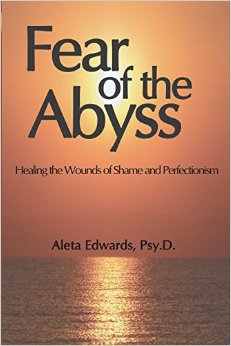
Archives
March 2022
Categories
All
|
 RSS Feed
